A Teachers Identity
This video tells the powerful story of Kathy Petrelli, a longtime school secretary whose identity is deeply rooted in her role within the school community. After experiencing the devastating loss of her son—news she received while at work—her connection to that space became even more complex and emotional. Rather than stepping away, Kathy chose to return, finding comfort in the familiarity and purpose her job provided. This tragic experience ultimately deepened her compassion for others, shaping how she interacted with students and staff. Kathy’s story shows how educators often develop such a strong sense of identity through their work that it becomes inseparable from who they are. For Kathy, continuing her role was not just about a job—it was about holding onto a sense of self. While going back to work was a distraction from home, it also gave her back her identity. Kathy helps show why many educators struggle with retirement, as leaving the profession can feel like losing a core part of their identity and purpose.



Dean Corkum’s dual identity as a coach and teacher.
Courtesy of Dean Corkum

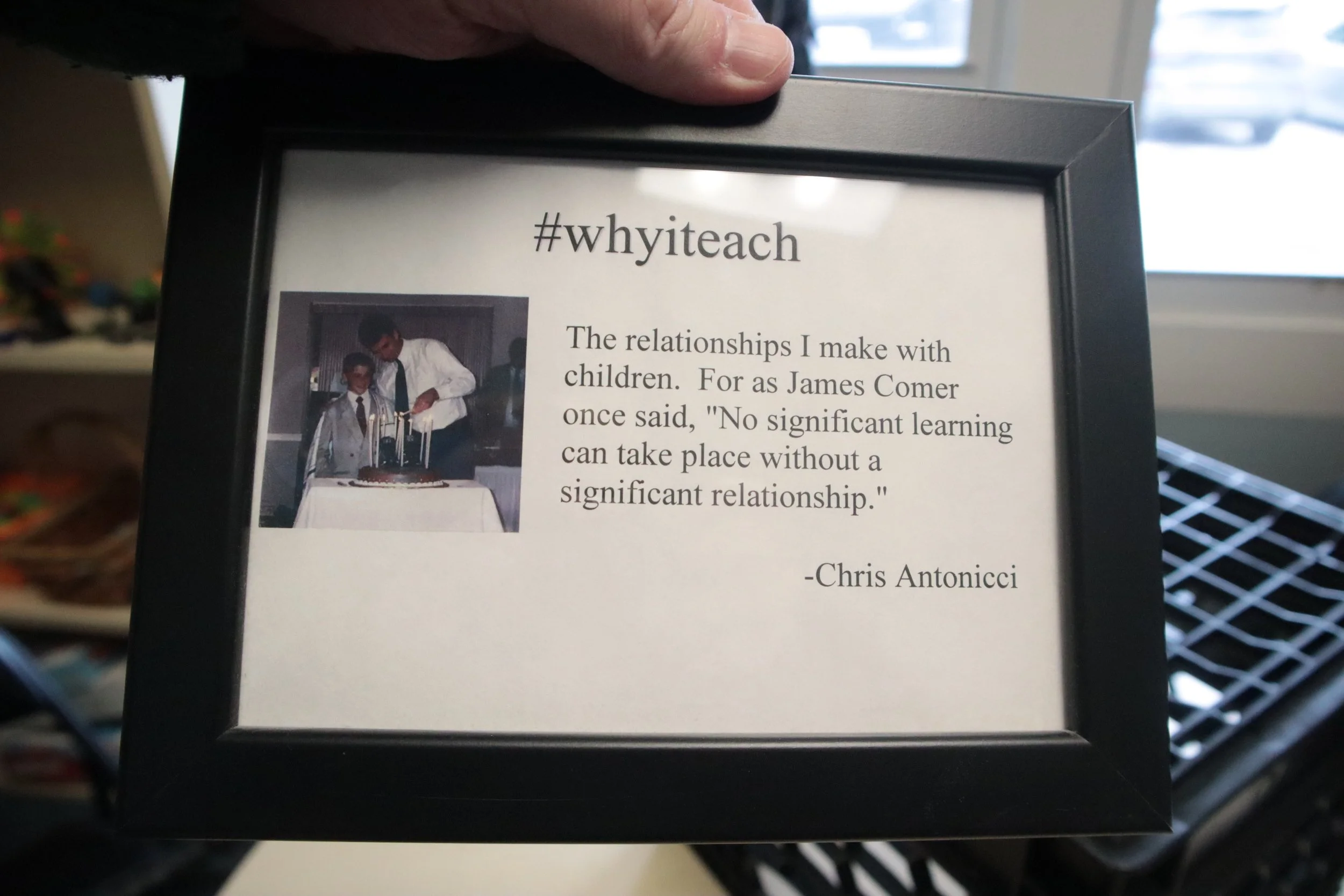
Chris Antonicci’s identity as a principal.
A teacher's job is heavily linked to their identity because teaching is not just a layout of tasks, but a social, emotional, and moral role that shapes how individuals develop. This connection is often described as “teacher professional identity.” Teaching shapes one's identity through adopted behaviors, values, and expectations tied to the profession. Over time, teachers internalize; being responsible for students, acting as role models, and upholding moral and social expectations. (28) This identity isn’t just learned, it’s developed through training, education, classroom experience, and interaction with students and other staff.
Identity also develops through ongoing socialization in schools and professional communities. Teachers often link their self-worth to students' success, and continue to keep in touch with students throughout their lives, thus making a deeper personal connection with the people they “work with.” A study from the National Library of Medicine found that, out of a study based on 923 student teachers, 40.2% had high professional identity, 42.7% had moderate identity, and only 5.1% had low identity, showing that most teachers strongly identify with their role. (29) Teaching is more identity-linked than many other professions because they have a strong moral purpose, its work is seen as extremely meaningful, through shaping future generations. They also have constant social interaction; every day, their identity is reinforced through students, parents, colleagues, and the emotional investment they choose to give.