So You Think You Want To Be a Teacher…
Post-COVID teachers have been experiencing serious levels of burnout and stress. In a study from PubMed, it’s said that burnout increased during the COVID-19 pandemic and was linked to working conditions and school leadership. (17) The key predictors of burnout are COVID-related anxiety, teaching stress, stress communicating with parents, and lack of administrative support. There are multiple pressures from teaching that go beyond the classroom. (18)
Students have also faced a lot of challenges in and out of the classroom. After COVID, 80% of schools have seen an increase in disciplinary problems.(19) Common issues include; disruptions, disrespect towards teachers and admin, and also fighting and bullying. 39% of educators have said that students’ social emotional skills were negatively affected. (20) This has an impact on social skills, emotional regulation, and also behavior in class.

All forms of technology have become forms of distraction for students, but cell phones and social media have the largest impact. From the Pew Research Center it was found that 54% of teens say they spend too much time on their phones, and many report that it distracts them from schoolwork. (22) The American Psychological Association found research on multitasking, and it shows that multitasking reduces productivity and memory because the brain is not designed to focus and multitask. (23) That being said, 72% of U.S. high school teachers say cellphone distractions are major problems in class. (24) Many teachers report that they get personally distracted by students’ phone use, and that use of phones in class can affect the quality of teaching and the whole class experience. (25) Some schools have even started using YONDR phone locking pouches to minimize phone usage in classrooms.

Being financially stable during retirement as a teacher is very difficult. A few years ago, the idea of a pension was very smooth sailing. A lot of schools would support teachers, so they had good healthcare benefits, and also did not have to worry about saving large amounts of money to support themselves in retirement, or having to get a job after teaching.
Now, teaching jobs that offer pensions are becoming less and less. Especially in private schools, pensions are almost non-existent. In an interview with Nancy Westbrook, a Financial Advisor at One Day In July, in Burlington, Vt, she said, “The most common struggle is that a lot of teachers haven’t really done the math, or thought about how they’re going to pay for retirement.” Some schools have pensions that will cover 80% of income, based on one’s individual cost of living; they may need another job or find a way to save to cover that lingering 20%. A lot of schools cover less than 80% in pensions. Now in the United States, that percentage is normally 40-50% of a worker's income. (21) Depending on where you live and the school you work at.
For students going into the teaching world, Westbrook suggests starting a savings investment account (Fidelity, Vanguard, etc..) At age 25, if you save $214 a month with 9% interest, you will have around a million dollars by 65.

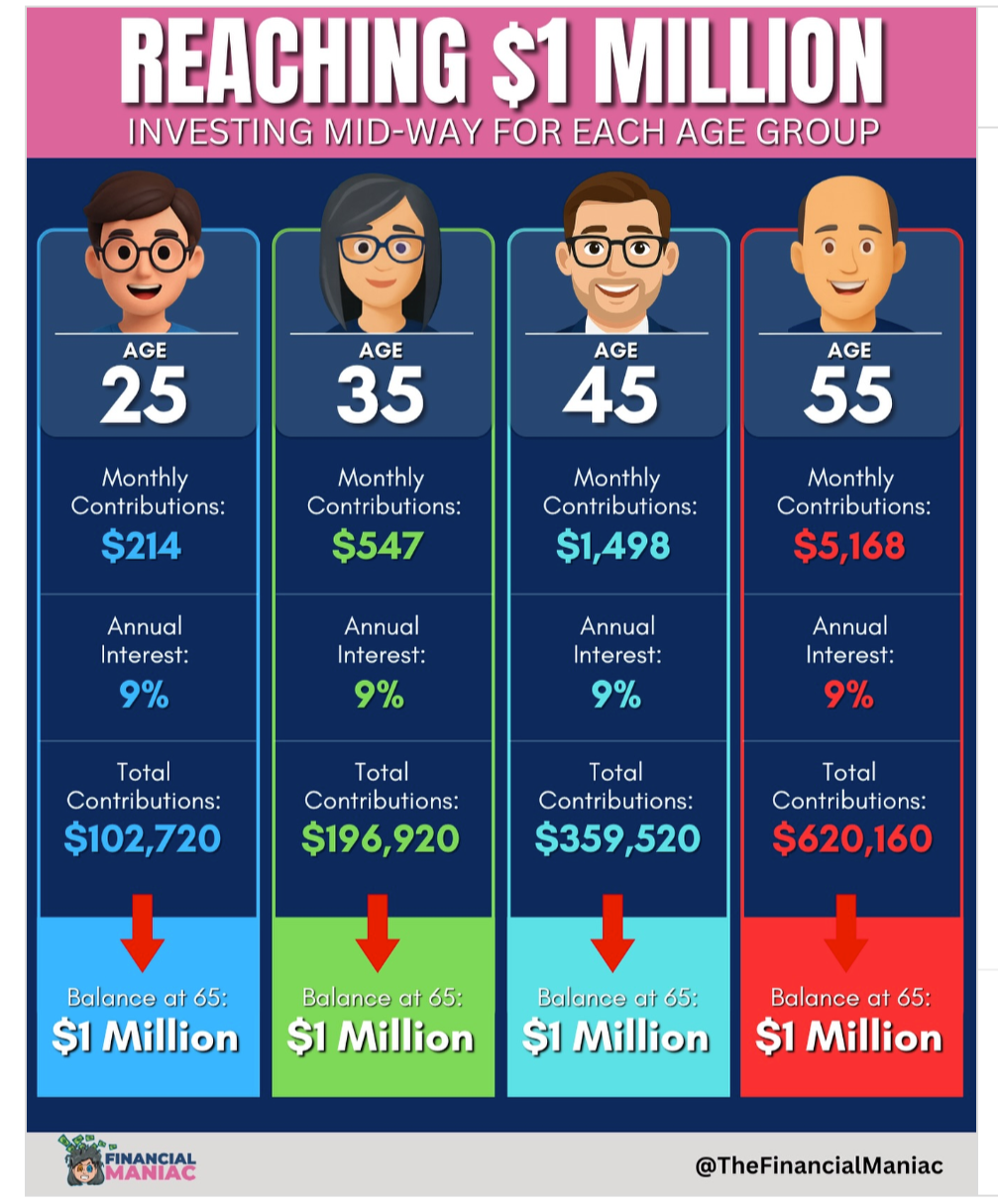
Courtesy of One Day In July, Financial Advisors
